Safety

Deepfakes, AI Voices, and Generated Dating Profiles: How to Check Without False Certainty

Why a convincing face, voice, or live-looking clip is not enough—and how to use independent checks before sharing access or money.

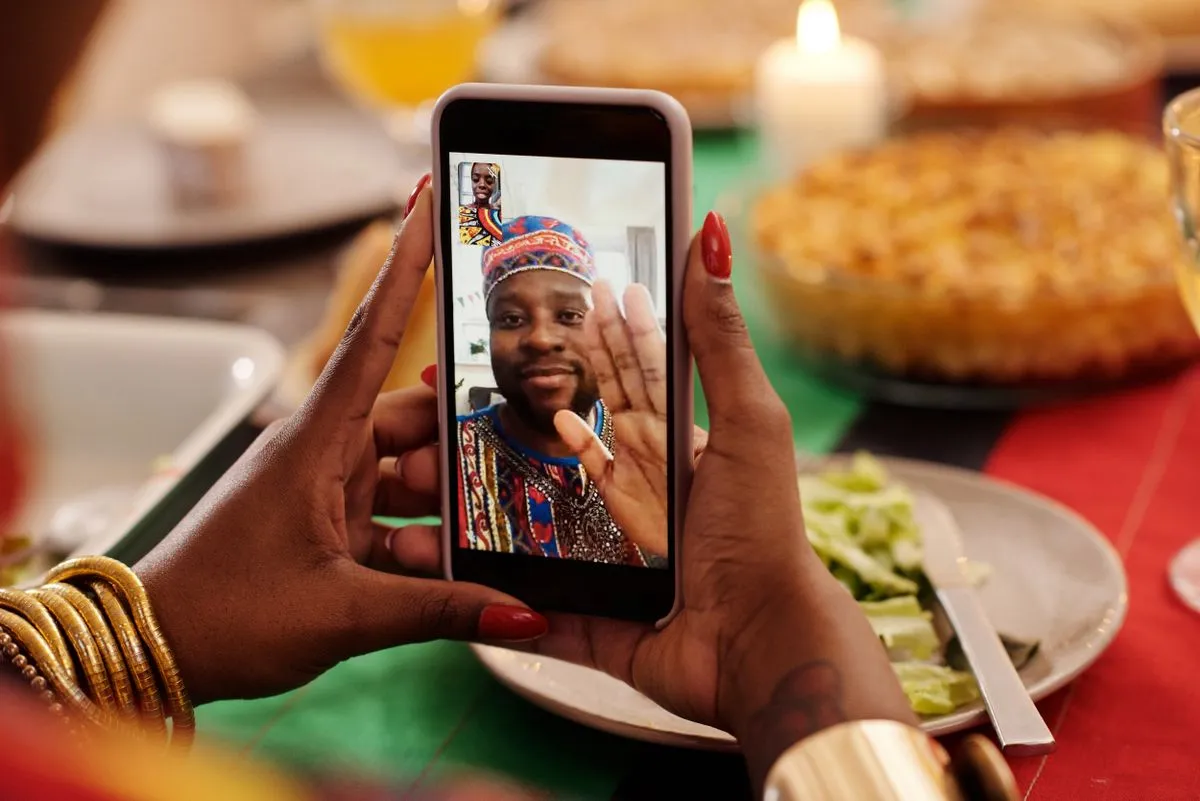
Smiling person using a smartphone for a video call at home

AI-generated faces, edited video, cloned voices, and polished fake profiles make a single “proof” less reliable than it used to be. You do not need to become a forensic expert. Use several independent signals, slow down when a story becomes urgent, and never let a convincing face or voice unlock money, documents, or private access.

Why one realistic clip proves very little

A generated or altered image can look imperfect, but a real image can also be borrowed, old, or paired with a false identity. A video call may show a person who exists while leaving their name, location, relationship status, and financial story unverified. A cloned voice can sound familiar when it says a sentence chosen to create urgency. The lesson is not “trust nothing”; it is “do not let one medium carry the whole decision.”

Scammers can combine ordinary photos with synthetic details. The profile may have a plausible gallery, a copied social account, a voice note, and a live call. Each item feels like confirmation, but if all of them came through the same person or link, they are not independent checks.

Focus on behavior and consequences. Does the person accept a slow pace? Can you verify a public claim through a source you find yourself? Do they keep money and identity documents out of the relationship? Synthetic media increases the need for these questions; it does not replace them.

Red flags around synthetic media

Urgency

The voice says act now

A familiar-sounding voice note or video that demands money, codes, or secrecy should be treated as unverified. Pause and contact people through channels you already trust.

Access

The “verification” link is private

Do not upload documents, install software, or sign in through a link sent by a dating contact, even if the page uses convincing branding.

Inconsistency

Small details do not line up

Names, time zones, lip movement, lighting, biography, and availability can conflict. One oddity is not proof, but a pattern deserves distance.

Isolation

They reject independent checks

A person who will only verify through their own link, recording, or “assistant” is controlling the evidence. You can stop without proving manipulation.

A multi-step check without digital detective work

  1. Slow the request

    Do not send money, codes, documents, or intimate media while somebody is waiting for an immediate answer.

  2. Change the channel independently

    If a voice message claims to be a friend or partner, contact that person using a number or app you already know, not the message’s reply path.

  3. Ask for a normal live interaction

    A short call can support recognition, but do not treat it as complete identity proof and do not reveal your home in the process.

  4. Verify public claims yourself

    Open official websites directly, check a business through an independent directory, and use more than one source. Do not rely on screenshots.

  5. Decide from the whole pattern

    If urgency, secrecy, money, and inconsistency appear together, block and report. You do not need technical certainty.

A convincing signal versus independent evidence

Single signal

  • A polished gallery
  • A voice note that sounds familiar
  • A live-looking video
  • A screenshot of a balance or passport

Independent check

  • A public meeting with your own transport
  • A trusted contact reached through a known channel
  • A provider you find and verify yourself
  • Consistent behavior over time without pressure

Protect your own images and voice

Public photos and voice notes can be copied. Avoid sending intimate images with your face, home, workplace, documents, or other identifying features to a new contact. Review who can download or forward media, and remember that disappearing messages do not prevent screenshots or recordings.

Do not send a stranger a “verification video” that shows your passport, address, or daily routine. If an app offers an official check, use its settings and read what is collected. A request inside a romantic chat is not the same as a secure identity process.

If somebody threatens to create or share synthetic intimate content, stop negotiating, save the threats, block and report, and seek local support. Do not pay or send more material to make it disappear; that can increase the leverage.

Detection tools can be wrong and synthetic-media methods change quickly. Treat technical analysis as one clue, not a final verdict.

The no-money rule still works

AI makes identity deception more persuasive, but it does not change the basic financial boundary. Do not invest, lend, buy crypto, forward payments, or share account access because a person’s face or voice feels familiar. A convincing story is still a story until independently verified.

If you receive an urgent request, write down the exact ask and speak to someone outside the connection. Contact your bank or provider using an official number. Never use remote-access software because a new romantic contact says they need to help you fix a payment or trading account.

When a person is genuine, a pause protects the relationship. When the interaction is engineered, the pause interrupts the mechanism.

Look at the relationship pattern, not only the pixels

People often search for one visual mistake: an odd hand, a strange reflection, a mouth that seems out of sync. Those clues can be useful, but they are not reliable enough to carry the decision. Compression, poor lighting, disability, language differences, and an unstable connection can make genuine media look unusual. A polished image can also hide deception perfectly.

The stronger question is whether the person allows independent reality. Can you choose the venue? Can you contact a supposed employer through an official source? Can you take time before paying? Can they answer a normal question without redirecting you to a link or assistant? A scam-shaped pattern remains a problem even if every pixel looks natural.

Be cautious with “proof challenges” too. Someone may ask you to perform a gesture, read a code, or send a video while they control the terms. A challenge can be recorded, edited, or used to train a model. You do not have to provide more biometric material to a stranger in order to earn a conversation.

If the person is genuine, a public meeting or ordinary call can happen without access to your documents, money, or private media. If the person is not genuine, those boundaries prevent a convincing performance from becoming a loss.

Use the same caution with celebrity lookalikes, professional profiles, and accounts with years of apparently normal posts. Stolen and synthetic content can be layered together.

Useful responses to synthetic-media pressure

Urgency

“I will verify independently”

Pause and open the provider, bank, or person’s known contact channel yourself.

Documents

“I do not send ID in a chat”

Use an official in-app process or decline. A romantic contact is not an identity-verification service.

Voice

“I will call a known number”

If a voice claims to be somebody you know, do not reply through the same message thread.

Media

“I do not send intimate verification videos”

No one is entitled to biometric or sexual material because they doubt your identity.

If synthetic media is used to threaten or impersonate

Save the account identifier, links, messages, and dates. Report the profile through the platform and use local support if intimate material, blackmail, stalking, or identity theft is involved. Do not forward intimate synthetic content to “prove” what happened; share only what a trusted service needs.

Change exposed passwords and review account sessions. If money or documents were shared, contact the provider through an official channel. Recovery begins with cutting off access, not with another payment to someone who promises to fix the problem.

Verify the claim, not the performance

A generated profile often becomes dangerous when it asks you to take an action outside ordinary dating: open a wallet, pay a fee, provide a code, or send an intimate file. You do not need to determine whether the face is synthetic before refusing. The request itself is enough to apply your boundary.

If a person claims to represent a company, charity, employer, or investment service, navigate to that organization yourself. Use a public website or official number, not the address in their message. Ask whether the person and request can be verified independently, and accept a no if the answer is unclear.

Do not upload your own face, voice, or documents to an unknown “AI detector.” A service that collects biometric material can create a new privacy risk while promising to solve the first one.

If you use a technical detector, read its limitations and treat the result as a clue. False positives and false negatives are possible, especially with compressed video, accents, lighting, and edited media.

The most reliable safety habit is still to keep money, account access, and intimate material separate from a new online connection.

A calm response to an AI-era red flag

Pause

Do not answer the urgency

Wait before clicking, paying, or sharing.

Verify

Use a known channel

Find the official contact yourself.

Limit

Share the minimum

Keep documents, codes, voice, face, and intimate media private.

Exit

Leave when the pattern is wrong

Report and block without proving the technology.

Questions about AI-generated dating profiles

Can I spot a deepfake by looking at the eyes or hands?

Visual clues can be inconsistent and detection is unreliable. Use a broader process instead of trusting one visual tell.

Does a live video call prove the person is real?

It may show a live person, but it does not prove every claim. Keep money, documents, and private access separate.

What should I do with a suspicious profile?

Stop sharing information, preserve relevant evidence, report through the platform, and block if contact is unwanted or unsafe.

A believable face is not a financial credential, and a familiar voice is not consent. Slow down, check through independent channels, and let behavior earn trust.


A good story can start with one hello

Meet someone you’ll want to keep talking to on Lover

Start meeting

When to Introduce Your Partner to Friends and Family

Breadcrumbing, Benching, and Orbiting: A Dating Glossary for Ambiguous Behavior

Gaslighting in Relationships: Signs of a Pattern That Undermines Trust in Yourself

Jealousy Without Romanticizing It: What the Feeling May Be Saying

Control Disguised as Care: Behaviors That Should Make You Pause

Emotional Rollercoasters: Why Unpredictability Can Feel Like Great Love

Toxic Relationship Signs People Often Notice Too Late

How to Safely Leave a Controlling or Abusive Relationship

Dating After a Toxic Relationship: How to Rebuild Trust in Yourself

How to Tell a New Partner About a Traumatic Experience

Why You Miss Your Ex Even When the Relationship Was Bad

No Contact After a Breakup: Who It Helps and When It Does Not Fit

Should You Delete Your Ex from Social Media?

Should You Give Your Ex a Second Chance? A Checklist for Real Change

First Date After a Long Relationship or Divorce

How to Handle Dating Rejection Without Turning It Into a Verdict on Your Worth

Rebound Relationships: Is a New Romance After a Breakup Doomed?

How to Find Closure When the Other Person Will Not Talk

Breaking Up When You Share Children, Housing, or Pets

Can You Stay Friends with an Ex?

How to Read Tone in Dating Texts: Periods, Emojis, and Long Messages

Dry Replies or Just Busy? How to Read Three Dating Messages

Should You Have a Call or Video Chat Before a First Date?

How to Revive a Dating Chat That Has Gone Quiet

How to End a Dating Conversation Politely

Consent in Sexting: What to Discuss Before Sharing Intimate Messages

How to Respond to an Unwanted Intimate Photo

How to Manage Multiple Dating Chats Without Treating People Like Cards

First-Date Conversation Map: From Easy Topics to Meaningful Ones

Phone-Free First Date: How to Reduce Digital Distractions Without Awkwardness

Dating Profile After a Breakup: What to Change

Voice and Video Prompts: How to Record Them Naturally

Friends, Pets, and Exes in Dating Profile Photos: What Works

How to Show Sexual Openness in Your Dating Profile Without Inviting Disrespect

A Queer Dating Profile Without a Template: Visibility, Safety, and Voice

How to Describe Non-Monogamy in Your Dating Profile

How to Talk About Religion and Culture in Your Dating Profile

Seasonal Dating Profile Refresh: When to Update Your Profile

Comment or Empty Like: Which Starts a Better Dating Conversation?

Questions and Stories: How to Balance a Dating Conversation

Boundaries Without Ultimatums: How to Phrase Limits Through Your Own Actions

Couples or Individual Therapy: Which Format Fits Relationship Problems?

Pre-Date Anxiety: A 20-Minute Reset Before You Leave

How to Stop Comparing Yourself with Other Dating-App Users

Dating Burnout: A Two-Week Plan to Recover and Restart Gently

How to Tell If a Relationship Is Ending or Going Through a Rough Patch

Taking a Break in a Relationship: Rules That Prevent Limbo

How to Break Up Respectfully: A Structure for a Difficult Conversation

Why People Ghost and How to Recover Without Chasing Closure

Stages After a Breakup: Why Recovery Does Not Move in a Straight Line

How to Compare Values in a Relationship, Not Just List Them

Transparency and Privacy in a Relationship: Do You Have to Tell Each Other Everything?

Emotional Intimacy: 7 Practices for Feeling Closer Without a Serious Talk Every Night

Quality Time or Just Time Together? What Makes the Difference

50 Questions to Help a Couple Get to Know Each Other More Deeply

How to Make Up After a Conflict: A Practical Repair Process

Stonewalling in a Relationship: How to Take a Healthy Pause Instead

Is My Need Too Much, or Is It a Normal Relationship Need?

Attachment Styles in Early Dating: A Useful Map Without Diagnosing Yourself

Before Moving In Together: A Checklist of 25 Agreements

One-Night Stand Without Mixed Signals: Expectations, Safety, and Aftercare

Ethical Non-Monogamy: Basic Agreements for Beginners

Sexual Desire Mismatch: How to Talk About It Without Blame

Different Libido Levels in a Relationship: Is It a Problem?

Aftercare After Sex: What It Is and How to Ask for What You Need

Slow Burn vs. Instant Spark: How Attraction Can Grow

How to Talk About Physical Boundaries in Simple Words

Intimacy Without Sex: 20 Ways to Grow Closer

Are We Dating or Already in a Relationship? How to Talk About Status

The Three-Month Dating Rule: Useful Milestone or Dating Myth?

15 Last-Minute Date Ideas That Still Feel Thoughtful

Seasonal Date Ideas: 10 Ways to Make Any Time of Year Feel Special

Accessible First Dates: How to Plan for Disability, Illness, and Sensory Needs

First-Date Ideas for Introverts: Formats That Do Not Feel Like a Performance

First Date After a Long Online Chat: How to Reset Expectations

How to Leave a Date Early: Polite, Direct, and Safe Options

When and How to Talk About Sexual Intentions While Dating

Safe Sexting: Consent, Privacy, and Boundaries Before You Send

Sex on the First Date: Questions to Ask Yourself Instead of Following a Rule

Friends with Benefits: What to Discuss Before You Start

Cheap Date Ideas That Still Feel Thoughtful

Morning and Daytime Date Ideas for People Who Do Not Love Bars

Should You Go on a Second Date If There Was No Spark?

Consent Is a Process: How to Check In Before, During, and After Intimacy

How to Talk About STI Testing, Condoms, and Contraception Without Shame

Chemistry or Anxiety? Why Strong Excitement Does Not Always Mean Compatibility

The Exclusivity Talk: When to Start It and What to Clarify

How to Build Trust Without Checking a Partner’s Phone or Location

Love Bombing or Just Too Much Too Soon? How to Tell

Dating Burnout: A Two-Week Reset Before You Try Again

Show, Don't Tell in a Dating Profile: Replace Generic Qualities with Living Details

Retouching and AI Photos in Dating: Where Improvement Becomes Misleading

30 First Messages Better Than “Hi, How Are You?”

How to Get Past Small Talk Without Turning Dating into an Interview

When to Invite Someone on a Date After Matching

What to Text After a First Date: Interest, Uncertainty, or a Clear No

Why Great Texting Does Not Guarantee Compatibility in Real Life

First-Date Checklist: What to Do 24 Hours Before You Meet

Gradual Self-Disclosure: How Much to Share on a First Date

Who Pays on a First Date? Four Honest Scenarios Without Gender Games

Slow Dating: How to Slow Down and Notice Compatibility

Can You Date Multiple People at Once? An Ethical Guide

The Paradox of Choice in Dating: Why More Profiles Can Feel Worse

Intuition or a Checklist: What Should Guide Your Dating Choices?

Monthly Dating Audit: 10 Questions About People, Boundaries, and Energy

How to Use Humor in a Dating Profile Without Looking Toxic

Dating Profile Details That Build Trust Before the First Message

15-Minute Dating Profile Audit: A Practical Checklist

Dating Profile for an Introvert: Show Yourself Without Performing

How to Update Your Dating Profile After Moving to a New City

How to Fill Out a Dating Profile: A Step-by-Step Guide

Dating Photos: What Works and What Puts People Off

Profile Mistakes That Cost You Matches

How to Write a Bio People Want to Reply To

How to Show Values and Goals Without Sounding Boring

An Honest Profile: Age, Height, Filters, and Expectations

Interests That Attract: How to Choose 5–7 That Work

Prompts and Facts About You: 50 Example Answers

Your Dating Profile After 30, 40, and 50: What to Change

Serious vs Casual Profile: What Is the Difference

First Date Without Pressure: 7 Easy Ideas

Mindful Dating: How to Meet People Without Burnout or Compromise

What Kind of Relationship Do I Want Right Now?

Quality Over Quantity: Why Fewer Matches Can Lead to Better Dates

Dealbreakers or Unrealistic Standards? How to Tell the Difference

Online or Offline Dating: Which Way of Meeting Fits You?

When to Take a Break from Dating Apps

How to Balance Dating, Work, Friends, and Rest

“I Don't Know What I Want”: How to Be Honest About Uncertainty

How to Look for a Serious Relationship Without Pressuring Every Date

Casual Dating With Respect: Agreements for Low-Commitment Connections

How a Romance Scam Works: From the Perfect Match to a Request for Money

Pig Butchering in Dating: Why Investment Offers Are So Dangerous

Why Dating Should Stay Separate from Investments, Loans, and Crypto

Dating Profile Verification: What It Confirms and What It Cannot Guarantee

How to Check a New Match’s Photos Without Becoming a Stalker

Personal Data You Should Not Rush to Share in a Dating App

Geolocation Privacy in Dating: Do Not Reveal Your Home or Daily Route

When Is It Safe to Move from a Dating App to a Messenger?

A Safe First Date Plan: Place, Transport, and a Trusted Contact

Alcohol and Date Safety: Limits, Drinks, Consent, and Getting Home

When to Block and Report a Dating-App User

Consent or Coercion? How Pressure Can Hide in Dating

Stealthing and Protection Agreements: When a Sexual Boundary Is Violated

LGBTQIA+ Dating Safety While Traveling or Starting in a New City

Queer Dating When Everything Feels Uncertain: Finding Clarity and Support

How and When to Talk About Bisexuality with a New Partner

If You Are Someone’s First Queer Experience: How to Date with Care

Respectful Dating with Trans and Nonbinary People

When to Talk About Chronic Illness or Disability While Dating

Dating as a Single Parent: Time, Boundaries, and Introducing a Child

Dating After 50: New Rules, Old Myths, and What Actually Helps

Long-Distance Relationships: What to Discuss Before Calling It Serious

Different Religions, Cultures, and Politics: What Can a Couple Negotiate?

Big Five Compatibility in Dating: What Personality Traits Can and Cannot Explain

MBTI in Dating: Conversation Prompt or False Precision?

Astrology and Dating Compatibility Without Magical Thinking

Shared Interests or Shared Values: What Matters More Long Term?

How to Meet People After Moving to a New City

AI in Dating: Where It Helps and Where It Starts Replacing You