Lover

An introvert-friendly first date gives conversation a place to begin, some quiet for your attention to recover, and a time frame that does not make the evening feel like an endurance test. You do not need to become louder, faster, or more entertaining than you are.
Formats that take pressure off
Side by side
A familiar walk
Moving through a known neighborhood makes silence less conspicuous and gives you things to notice together.
Built-in topics
Bookshop, gallery, or market
The surroundings supply openings, so you do not have to invent a new question every minute.
Gentle play
Mini-golf, pottery, or a puzzle cafe
A shared task can make awkwardness ordinary. Choose an activity where being inexperienced is acceptable.
Small frame
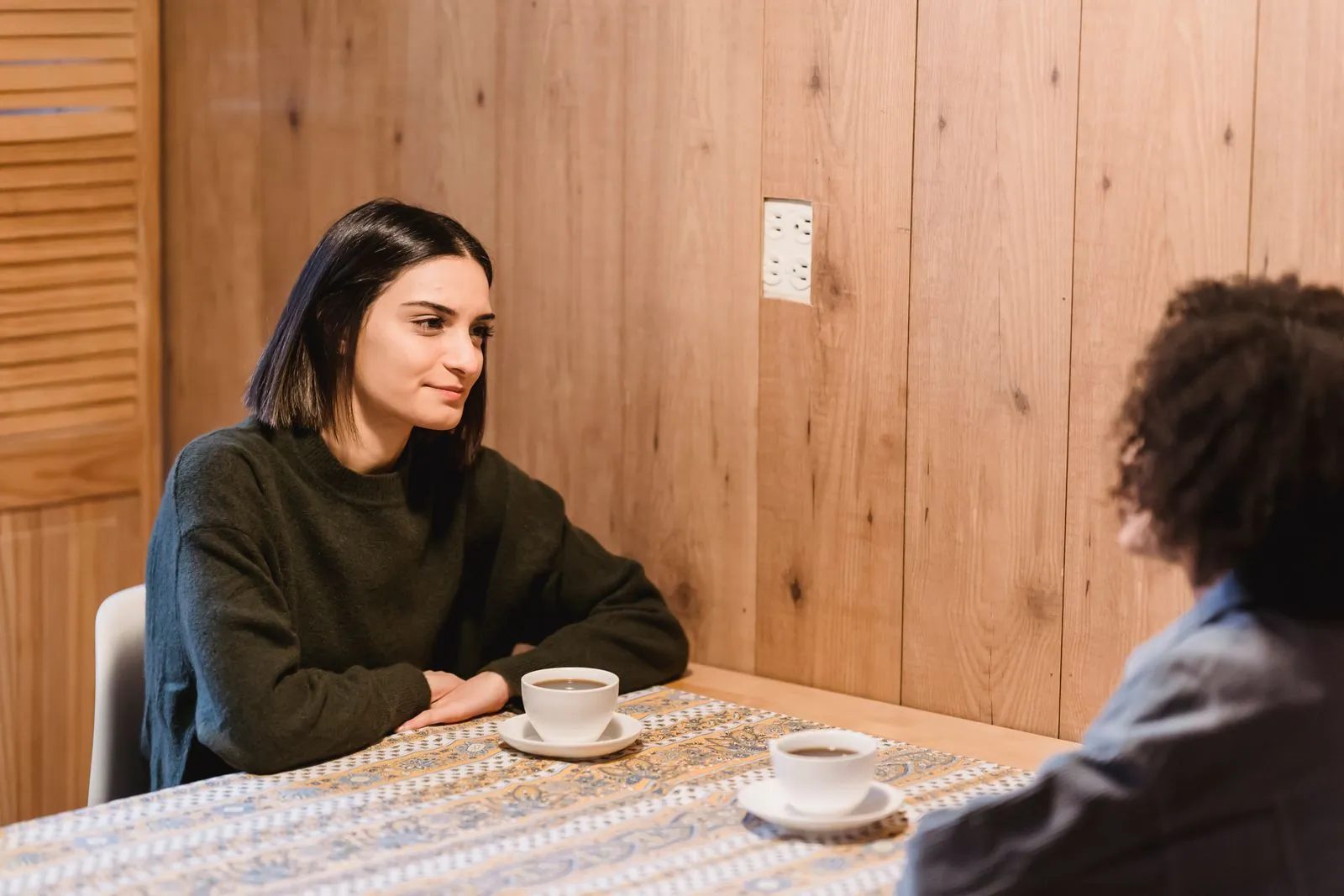
Coffee before another commitment
A defined hour gives you an exit and can be extended when the connection feels good.
Prepare for comfort, not performance
Choose a place you can find, a menu you can understand, and a route you can leave independently. Familiarity does not make the date boring; it frees attention for the person. Arriving a little early can also help you settle before the social work begins.
You can tell a match that you prefer quieter settings or need a little time to warm up. This is useful information, not a warning label. A compatible person does not need you to pretend that an exhausting environment is your natural habitat.
Make the conversation reciprocal. You do not have to carry it with a stream of clever stories. Ask a follow-up, share a related detail, and let a pause exist. A date does not need to be a continuous performance.
A low-pressure plan for the first meeting
Choose one activity
Pick a setting that gives you something to react to without hiding the people completely.
Set a time limit
Try 45 to 90 minutes. A shorter plan can respect your energy and still reveal useful information.
Prepare three bridges
Think of one profile detail, one current interest, and one question about an ordinary week. Use them as starting points, not a script.
Plan a reset
Know where you can take a bathroom or outside break. A pause helps you return present rather than pushing through overload.
Review the date kindly
Ask whether you felt more yourself as time passed. Do not score every pause or facial expression.
Quiet preference versus avoidance
Healthy quiet
- You choose a manageable setting.
- You still share and ask questions.
- You can stretch a little without abandoning yourself.
Avoidant pressure
- You cancel every meeting because certainty is impossible.
- You expect the other person to do all the emotional work.
- You leave no route for gradual practice or support.
Before you go
- The place is familiar or easy to navigate
- The date has a clear start and ending
- I have a few conversation bridges, not a full script
- I can take a short pause if I need one
- I am looking for comfort and curiosity, not a perfect performance
Questions about introvert first dates
What should introverts talk about on a date?
Use the environment and follow one thread: what brought them there, what they are enjoying lately, or a detail from their profile. Offer your own answer after asking.
Should I warn someone that I am shy?
You do not need to label yourself. Sharing a preference for a quieter pace can prevent misinterpretation and help you choose a better setting.
What if I am too nervous to speak?
Lower the stakes, use a side-by-side activity, breathe, and allow a shorter meeting. If fear regularly blocks connection, consider speaking with a mental-health professional.
Your best first date may look quieter than someone else’s. Choose a setting where your attention can arrive gradually and you can meet without performing.